
In an era where data breaches make headlines weekly and consumers demand both convenience and security, payment tokenization has emerged as one of the most critical technologies in the modern payment ecosystem. Yet despite its importance, many merchants, ISVs, and even payment professionals do not fully understand how it works or why it matters.
At Mojave Technologies, we have spent years architecting payment solutions that leverage tokenization across countless deployments, from unattended kiosks to mobile applications to traditional retail environments. This guide breaks down everything you need to know about payment tokenization, its role in the ecosystem, and how to leverage it effectively.
What Is Payment Tokenization?
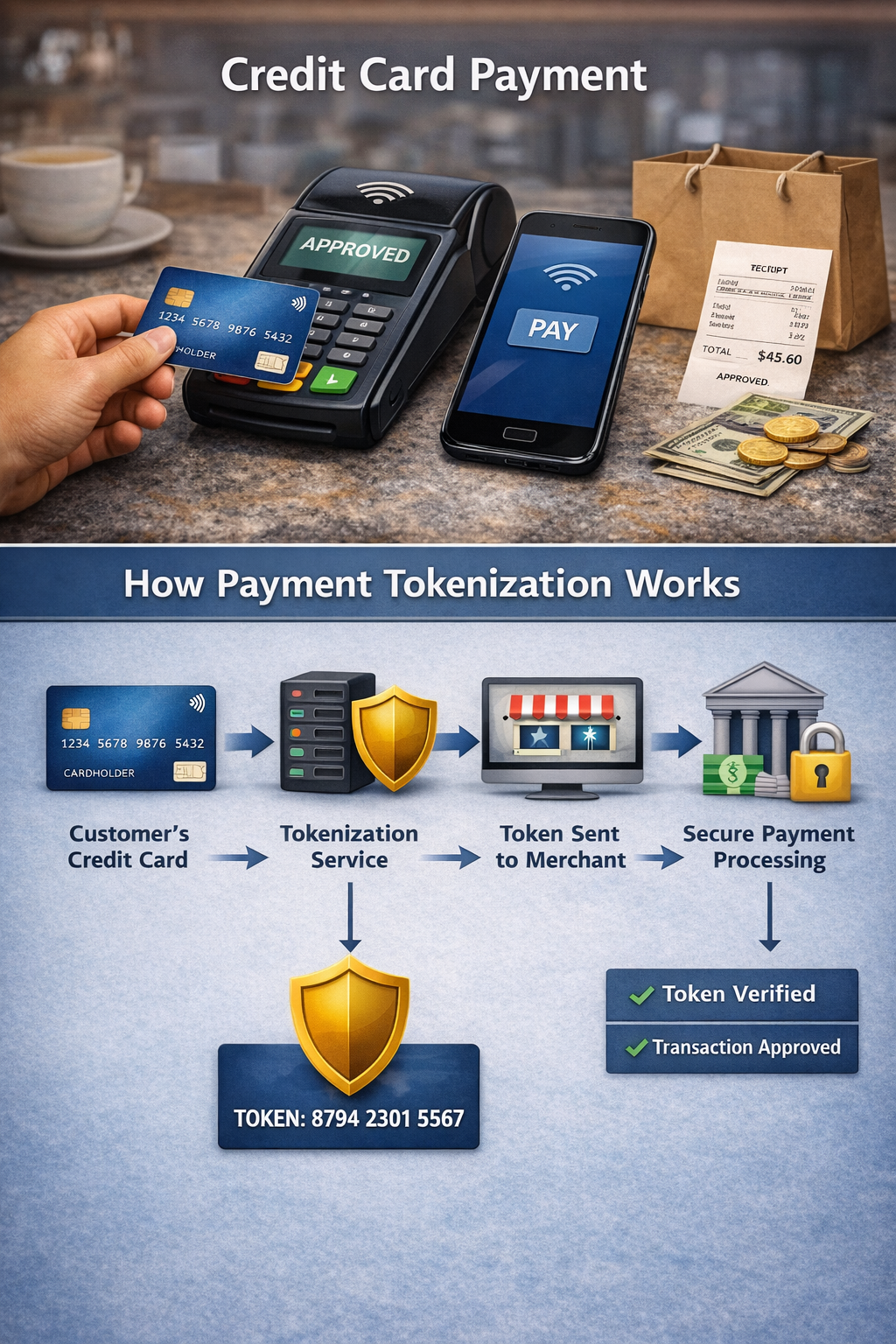
Payment tokenization is the process of replacing sensitive cardholder data, specifically the Primary Account Number (PAN), with a non-sensitive equivalent called a token. This token has no exploitable value outside of the specific context in which it was created.
Think of it like a coat check ticket. The ticket itself has no value, but it represents your coat, which is securely stored elsewhere. If someone steals the ticket, they cannot do much with it without access to the coat check system. Similarly, if a tokenized card number is intercepted, it cannot be reverse-engineered back to the original PAN.
A typical card number transformation looks something like this:
Original PAN: 4111 1111 1111 1111 Tokenized Value: 4111 11XX XXXX 8472 (or a completely random alphanumeric string)
The token is mathematically generated and stored within a secure token vault, which maps tokens back to actual card data only when authorized parties need to process a transaction.
Why Tokenization Matters in the Payment Ecosystem
The payment ecosystem is a complex web of merchants, acquirers, processors, networks, issuers, and consumers, each handling sensitive data at various points. Tokenization plays a foundational role in protecting that data throughout its journey.
Key Reasons Tokenization Is Essential
🛡️ Reduces PCI DSS Scope. When merchants store tokens instead of actual card numbers, the systems handling those tokens can fall outside the strict PCI DSS compliance scope, dramatically reducing audit complexity and cost.
💳 Protects Against Data Breaches. Even if a database is compromised, stolen tokens are useless to attackers without access to the token vault.
🔄 Enables Recurring and Card-on-File Transactions. Subscription services, ride-sharing apps, and one-click checkout experiences all rely on tokenization to securely store payment credentials.
📱 Powers Modern Payment Experiences. Apple Pay, Google Pay, Samsung Pay, and other mobile wallets are built entirely on tokenization frameworks.
🌐 Supports Omnichannel Commerce. Tokens can travel across in-store, online, and mobile environments, providing a unified customer experience.
⚡ Improves Authorization Rates. Network tokens, in particular, automatically update when cards are reissued, reducing failed transactions and customer friction.
The Major Benefits of Tokenization
For Merchants
✅ Significantly reduced PCI compliance burden and associated costs
✅ Lower risk of breach-related fines, lawsuits, and reputational damage
✅ Higher transaction approval rates with network tokens
✅ Simplified support for card-on-file and recurring billing models
✅ Faster integration with modern payment platforms and wallets
For Consumers
✅ Enhanced protection of personal financial data
✅ Seamless checkout experiences across devices and channels
✅ Continued service even when physical cards are lost, stolen, or expired
✅ Greater confidence in mobile and digital payment methods
For the Ecosystem
✅ Reduced overall fraud losses across the payment network
✅ Stronger trust between merchants, processors, and issuers
✅ A foundation for innovation in connected commerce, IoT payments, and embedded finance
Real-World Use Cases for Payment Tokens
Tokenization is not just a back-office security measure. It enables a wide range of practical applications that touch consumers and businesses every day.
🛒 E-Commerce Card-on-File
Online retailers store tokens representing customer payment methods, allowing returning shoppers to check out with a single click. The merchant never holds the actual card number, but can process transactions instantly.
🔁 Subscription and Recurring Billing
SaaS platforms, streaming services, gym memberships, and utility providers use tokens to securely charge customers on a recurring schedule without storing sensitive card data.
📲 Mobile Wallets
When a consumer adds a card to Apple Pay or Google Pay, the wallet generates a Device Account Number (DAN), which is a token tied to that specific device. The merchant never sees the real card number.
🏪 Unattended Retail and Kiosks
Self-service kiosks, vending machines, parking meters, and EV charging stations rely heavily on tokenization to securely process payments without persistent card data exposure. This is an area where Mojave has deep expertise across our HoneyBee Kiosk and unattended payment platforms.
🍔 Quick Service Restaurant Loyalty
QSR brands tokenize payment methods linked to loyalty profiles, enabling customers to order ahead, earn rewards, and pay seamlessly through mobile apps.
🚗 In-Vehicle and IoT Payments
Connected cars that pay for fuel or tolls automatically, smart appliances that reorder supplies, and wearable devices all use tokenization as the security backbone.
🏨 Hospitality and Travel
Hotels and airlines tokenize cards at booking, allowing for incidental charges, upgrades, and modifications without re-collecting payment information.
Notable Tokenization Programs by the Card Brands
Each of the major card networks has developed its own tokenization framework, collectively known as Network Tokenization. These programs are reshaping how payment credentials are managed across the ecosystem.
💙 Visa Token Service (VTS)
Launched in 2014, Visa Token Service was one of the first major network tokenization platforms. VTS replaces Visa card numbers with tokens that can be used across digital channels, mobile wallets, and card-on-file scenarios. Visa also offers automatic token lifecycle management, meaning tokens are updated in real time when underlying cards are reissued, lost, or expired.
❤️ Mastercard Digital Enablement Service (MDES)
MDES is Mastercard's tokenization platform, supporting mobile wallets, IoT devices, wearables, and card-on-file applications. It provides issuers and merchants with tools to manage token lifecycles, perform risk scoring, and enable secure remote commerce. MDES is foundational to many connected device payment experiences.
💚 American Express Token Service
American Express provides its own token service that supports digital wallets, in-app purchases, and recurring transactions. The program emphasizes seamless integration with merchant platforms and offers strong fraud protection through Amex's risk management infrastructure.
🧡 Discover Network Tokenization
Discover offers tokenization services through its Discover Token Service (DTS), supporting mobile wallets, e-commerce, and card-on-file use cases for Discover, Diners Club, and partner networks worldwide.
Common Benefits of Network Tokenization Programs
🔄 Automatic Credential Updates.No more declined transactions due to expired cards.
📈 Higher Approval Rates Issuers often approve network token transactions at higher rates than raw PAN transactions.
🔒 Domain Restrictions. Tokens can be locked to specific merchants, channels, or devices.
🚨 Faster Fraud Response. Compromised tokens can be deactivated without affecting the underlying card.
💼 Simplified Compliance. Reduced PCI scope when network tokens replace PANs in merchant systems.
Mojave Technologies: Your Partner in Secure Payment Innovation
At Mojave Technologies, security and tokenization are core to everything we build. With over 130 EMV Level 3 certifications completed across the United States, Canada, Europe, the Caribbean, and Latin America, our team has hands-on experience integrating tokenization solutions across virtually every major processor, gateway, and card network.
We specialize in:
🔐 EMV Level 3 Certifications for attended and unattended environments
📱 Custom Android Payment Applications with built-in tokenization support
🏪 Unattended Payment Solutions including kiosks, vending, and self-service terminals
💼 PCI Compliance Consulting to help merchants reduce scope and complexity
🤖 AI-Powered Payment Tools through our Rhumba.ai platform
🍯 HoneyBee Kiosk for full-service self-ordering and self-checkout deployments
Whether you are an ISO looking to expand your portfolio, a merchant seeking to modernize your payment stack, or a software company integrating payments for the first time, Mojave has the expertise to guide you through every step of the tokenization journey.
Ready to Tokenize Your Payment Strategy? Tokenization is no longer optional. It is the foundation of modern, secure, and scalable payment experiences. Whether you are protecting recurring billing, enabling mobile wallet acceptance, deploying unattended terminals, or building the next great commerce experience, the right tokenization strategy will make or break your success.
Let's talk about how Mojave Technologies can help you implement, optimize, and certify your tokenization solution.
📅 Book a meeting with our sales team: https://meet.mojave.co
📩 Contact us today:
https://mojave.co/contact-us/
#PaymentTokenization #PaymentSecurity #EMV #PCICompliance #FinTech #PaymentProcessing #DigitalPayments #MobileWallets #VisaTokenService #Mastercard #UnattendedPayments #PaymentInnovation #CardOnFile #NetworkTokenization #MojaveTechnologies