
3D Secure — better known as 3DS — is now a foundational layer of modern payment security. Whether you are a merchant, a payment processor, or an ISV integrating card acceptance, understanding what 3DS does and how it affects your transactions is no longer optional. It is a competicolorlorntactntactve and compliance requirement.
What Is 3DS?
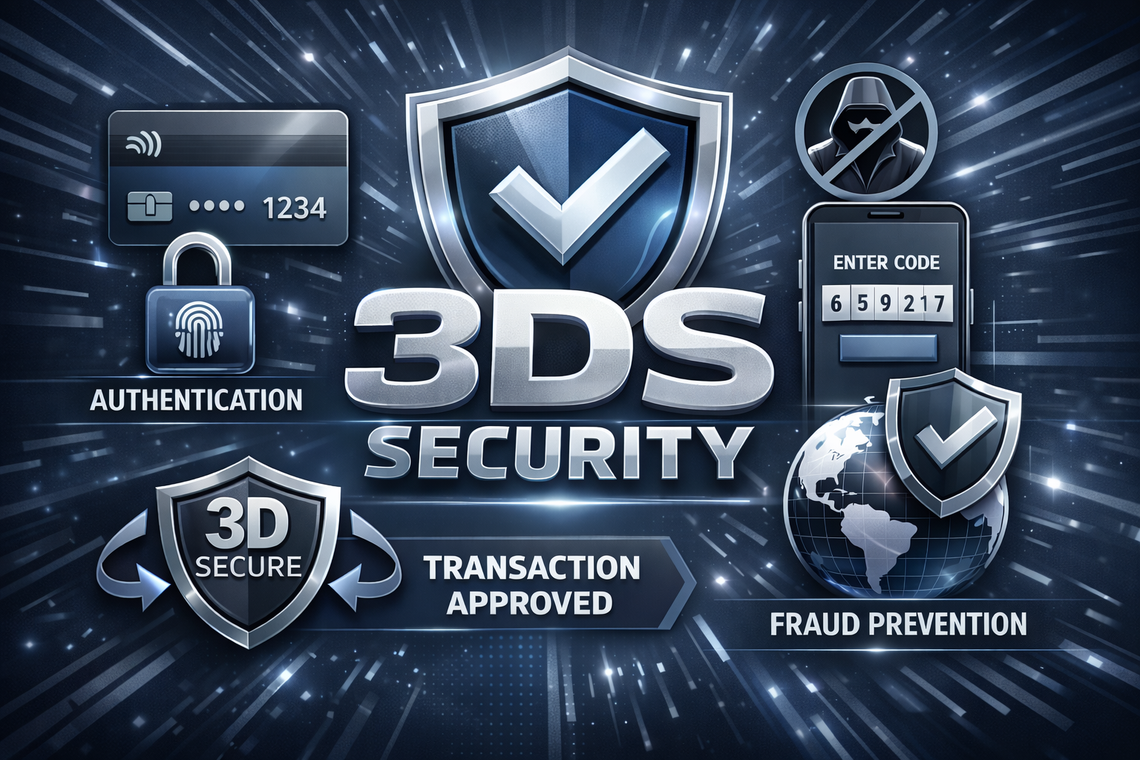
3D Secure (3DS) is an authentication protocol designed to add an extra layer of verification when a cardholder makes an online or card-not-present (CNP) payment. The "3D" refers to the three domains involved in every transaction: the issuer domain (the cardholder's bank), the acquirer domain (the merchant's processor), and the interoperability domain (the card network — Visa, Mastercard, Amex, or Discover).
First introduced in the early 2000s and significantly overhauled with EMV 3DS 2.0 (and now 3DS2.2+), the protocol enables real-time, risk-based authentication without forcing every customer through a disruptive redirect or static password challenge. The original 3DS 1.0 was clunky — it required pop-up windows and frustrated customers. EMV 3DS 2.x changed everything.
Quick Definition
EMV 3DS 2.x is a real-time, data-rich authentication framework that allows issuers to silently verify most low-risk transactions using device data, behavioral signals, and transaction history — while only stepping up to a challenge (biometric, OTP, etc.) when the risk score warrants it.
How 3DS Works: The Flow
When a cardholder completes a CNP checkout, the 3DS flow executes in the background:
- Data Collection: The merchant's 3DS SDK or JavaScript library gathers device fingerprinting data — browser type, screen resolution, IP address, timezone, behavioral signals.
- Authentication Request (AReq): This data is packaged and sent to the card network's Directory Server (DS), which routes it to the appropriate issuer's Access Control Server (ACS).
- Risk Scoring: The issuer's ACS analyzes the data against their fraud models. The vast majority of transactions pass as frictionless — no customer action required.
- Challenge (if needed): High-risk transactions trigger a challenge step — a one-time passcode, biometric confirmation, or app-based approval.
- Authentication Response (ARes): The ACS returns an authentication result. A successful authentication generates a cryptographic value that travels with the authorization, shifting fraud liability to the issuer.
The Liability Shift — Why It Matters to Your Business
The single most commercially significant outcome of a successful 3DS authentication is liability shift. When a transaction is authenticated via 3DS and later disputed as fraudulent, the fraud liability moves from the merchant to the card issuer. Without 3DS, CNP fraud chargebacks land on the merchant — and the associated fees, time, and revenue loss add up quickly.
For merchants with high CNP volume — e-commerce, subscription billing, MOTO, unattended kiosks with card-not-present flows — the ROI of implementing 3DS is direct and measurable.
Benefits of EMV 3DS
Chargeback Protection
Authenticated transactions shift fraud liability to the issuer, reducing your chargeback exposure and protecting revenue.
Frictionless UX
EMV 3DS 2.x authenticates 90%+ of transactions silently, with no customer interruption — unlike the disruptive 3DS 1.0 pop-ups.
Richer Data = Better Approvals
More data shared with issuers means smarter risk decisions and fewer false declines — a win for conversion rates.
Global Mandate Compliance
The EU's PSD2 Strong Customer Authentication (SCA) regulations require 3DS for most European CNP transactions. Mandates are expanding.
Supports PCI Scope Reduction
When combined with tokenization and encryption, 3DS is part of a layered security strategy that can reduce your PCI DSS scope.
Native Mobile Support
EMV 3DS 2.x was built for mobile — native SDKs for iOS and Android enable smooth, in-app authentication without browser redirects.
How 3DS Affects Different Payment Environments
E-Commerce and Card-Not-Present
3DS is most commonly associated with e-commerce. Online merchants integrate 3DS via a JavaScript library or server-side API. The authentication result is included in the authorization request to the acquirer. Markets with SCA mandates (UK, EU) have seen measurable drops in CNP fraud since mandates went into effect.
Unattended and Kiosk Payments
Unattended terminals and kiosks occupy an interesting space. Most unattended CNP flows — where the card is present but the cardholder is self-serving — can benefit from 3DS when integrated thoughtfully into the payment application. The key is ensuring the device data and session context are properly passed to the 3DS requestor environment.
Recurring and Subscription Billing
For subscription merchants, 3DS applies most critically to the initial authorization. Subsequent recurring transactions can often use exemptions (merchant-initiated transactions, or MITs), but the first transaction must be properly authenticated to establish the mandate. Getting this right at the integration level is critical.
3DS and EMV — Understanding the Relationship
EMV (Europay, Mastercard, Visa) is the chip-based standard for card-present transactions. 3DS is the card-not-present counterpart — they address different transaction environments but are both governed under the broader EMV framework. Payment professionals often work across both disciplines simultaneously.
At Mojave Technologies, our team works at the intersection of both. We hold deep expertise in EMV Level 2 and EMV Level 3 certifications — the rigorous interoperability testing processes that validate payment kernels and applications on hardware terminals — as well as the software-side protocols like 3DS that govern CNP security.
EMV Level 2 vs. Level 3 — A Quick Distinction
EMV Level 2 certifies the chip card kernel — the low-level software that handles chip card communication on a terminal. EMV Level 3 certifies the full payment application against a specific acquirer or processor's platform, validating end-to-end transaction flows, decline handling, partial approvals, and more. Mojave has completed 131+ EMV Level 3 certifications across the US, Canada, LATAM, Europe, and the Caribbean — one of the deepest track records in the industry.
Mojave Technologies and Deep Payment Expertise
Mojave Technologies is a Las Vegas-based payment technology firm specializing in EMV certification, custom payment application development, PCI compliance, unattended payment systems, and AI-driven automation. Our engineering team has navigated the full certification stack — from EMV L2 kernel testing through L3 processor certifications with platforms including TSYS, Heartland, FiServ, and more.
When it comes to 3DS, our perspective is practical. We help ISVs, acquirers, and merchants understand where 3DS fits in their payment architecture, how to integrate it correctly the first time, and what the liability, compliance, and UX implications are. Whether you are launching a new CNP product, certifying an unattended kiosk, or navigating SCA mandates for a European rollout — we have been through it.
What to Do If You Are Not Yet 3DS-Enabled
- Audit your CNP volume: Understand what percentage of your transactions are card-not-present and what your current chargeback ratio looks like.
- Talk to your acquirer: Most major processors now support 3DS authentication — confirm what version (2.1, 2.2, 2.3) they support and what data they require.
- Evaluate your integration options: JavaScript SDK, server-to-server, or mobile native — the right approach depends on your platform architecture.
- Plan for exemptions: Not every transaction requires a full 3DS flow. Low-value transaction exemptions, trusted beneficiary exemptions, and MIT flows need to be mapped into your authorization strategy.
- Test thoroughly: 3DS integrations fail silently in production if not properly tested — frictionless fallback to challenge, error handling, and timeout management all need validation.
Ready to Talk Payments?
Mojave's team of certified payment engineers is available to walk through your 3DS strategy, EMV certification roadmap, or payment integration challenges. No generalists — just specialists who have done the work.
Schedule a Meeting with MojaveYou can also reach us directly at hello@mojave.co.